Ernie Hudson
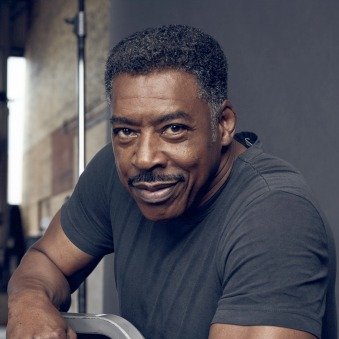
Actor
Ernie Hudson’s path to the stage began in Benton Harbor, Michigan, where he filled notebooks with short stories, poems and songs, already imagining his words coming alive under the lights. After a brief enlistment in the Marine Corps, he moved to Detroit and became the resident playwright at Concept East, the nation’s oldest Black theatre. He also enrolled at Wayne State University to hone his writing and acting skills and founded the Actors’ Ensemble Theatre, giving young Black writers and performers a space to create and direct their own work.
Hudson earned his B.A. from Wayne State and received a full scholarship to the Yale School of Drama’s M.F.A. program. While performing with Yale’s repertory company, he was cast in the Los Angeles production of Lonne Elder III’s Daddy Goodness. That opportunity led to a meeting with director Gordon Parks, who offered Hudson his first feature film role in Leadbelly (1976).
What followed was a year of bit parts and hard lessons about the industry—an experience that briefly pushed him back toward academia through a doctoral program at the University of Minnesota. He ultimately left the program, recognizing, as he put it, that “there are those who spend their lives studying it and those who spend their lives doing it.” He chose to keep doing the work.
Hudson returned to the stage in a starring role as Jack Jefferson in Theatre in the Round’s production of The Great White Hope, committing fully to the part—right down to shaving his head. A steady run of television roles followed, including appearances on Fantasy Island, The Incredible Hulk, Little House on the Prairie, Diff’rent Strokes, Taxi, One Day at a Time, Gimme a Break!, The A-Team and Webster. He also co-starred in numerous TV movies, among them White Mama, Roots: The Next Generations, Women of San Quentin, California Girls, Mad Bull and Love on the Run.
His early feature film credits include The Jazz Singer, The Main Event, Spacehunter: Adventures in the Forbidden Zone, Penitentiary II, Going Berserk and Joy of Sex—with his breakthrough coming as part of the iconic ensemble cast of Ghostbusters (1984).
